4.8/5 stars on Trustpilot
 Free Next Day Delivery*
 Existing Customers, Call 0800 112 3201
 Fall Alarms for the Elderly
An elderly personal alarm with automatic fall detection can detect a fall and call for help without you needing to push the button. This is vital is you are unconscious or immobile following a sudden illness or a fall. The call will automatically go through to either your nominated contacts or a SureSafe operator, depending on which service you have chosen. You will be able to get the help you need fast, even if you are unable to press the button.
Mobility Decline: Maintaining Independence When Walking Becomes Difficult
Article by Daniel Westhead
For an older person, good mobility can determine whether living at home is still an option. Moving around is central to getting out the house and providing good quality of life, but what happens when walking becomes difficult? Whether it’s arthritis, Parkinson’s disease, or something else, maintaining independence with declining mobility is tough.
The National Institute on Aging reports that over 25% of people aged 65 and older will have a fall at least once a year. Even falling just once, can prove a traumatic time for a person and may prevent them doing certain activities.
But in an age where innovative technologies such as assistive devices and fall detectors exist, mobility problems shouldn’t mean people can’t live life to the full. With a combination of strategies and the right support, older people can continue to be active, even when their mobility changes.
This article will look at the benefits of mobility devices that are around to help you, or an older loved one, feel more confident.
Assistive device options and their stigma
Believe it or not, there’s a stigma around using assistive devices. While some are happy to use canes, crutches, and walkers for physical support, for others, it can make them feel weak and less independent.
Some might worry about friends or family members treating them differently if they were to use a walking aid. This social pressure can make people reluctant to use a cane, walker, or medical alert, even if it would improve safety.
However, it’s imperative that seniors view assistive devices as tools for independent living rather than symbols of weakness. Modern designs are sleek and lightweight, and many are adjustable to suit individual needs. Choosing a device that fits well and feels comfortable is essential for everyday use.
A properly fitted cane or walker can help maintain balance, reduce strain on joints, and allow for longer periods of walking without feeling tired. Whereas a wearable alarm can alert someone if you fall at the touch of a button.
But what aids are around and how are they used?
Walkers
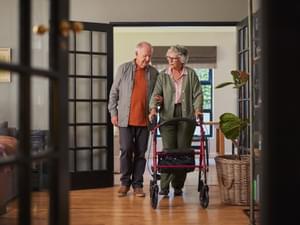
Nowadays, walkers (or rollators as they’re sometimes known) are more streamlined than they used to be. Some are foldable, lightweight, and generally easy to use for everyday chores like shopping. You can even get an aid that has a built-in shopping bag to make carrying groceries even easier.
Canes
A cane might be associated with getting older, and might have the most stigma surrounding it, but like walkers, they have advanced over time. Lightweight, foldable, and easy to store, a cane can be the first step in your mobility journey.
Personal alarms
Fall detectors, wristlets, and GPS trackers are an innovative way to lead a normal life with mobility issues. Although these are not walking aids as such, they can help people live independently and ensure family members are informed of any injuries or falls while they’re not around.
Physical therapy and at-home strength training
There’s a lot to be said about exercise and keeping those muscles moving, whatever your age. Physical training and strength training can be used as a preventative method to reduce mobility problems.
Even minor exercises can strengthen muscles, improve balance, and reduce the risk of falls. Working with a physical therapist can provide guidance on safe movements and exercises tailored to an individual’s level of mobility.
If exercising out of the home isn’t a preference, don’t worry. There’s plenty of training that can be done at home. Resistance bands and light weights can also be used safely at home to build strength in the arms and legs. In fact, just moving around the house or going up the stairs will get you active.
We’re not saying seniors need a gym membership, just quick routines to improve flexibility and core strength.
Home layout modifications for limited mobility
Another important step in maintaining independence could be to adapt your home. Narrow hallways, loose rugs, stairs, and even cluttered furniture can cause falls and other issues, especially if you have reduced mobility. Simple changes can make a significant difference in safety and comfort.
Creating clear pathways, decluttering your home, and perhaps installing grab bars in the bathroom and outside the front door, could help reduce the risk of falls and injuries.
Another option is installing a motorized stair lift or handrails along your staircase to help getting up the stairs. However, for multi-story homes a motorized stair lift might be a game changer.
Lighting can also play a pivotal role in home modifications. Well-lit hallways, night lights, and motion-sensitive lighting can also help to prevent trips and falls while living independently. A home layout that is carefully designed and adapted to your needs can allow seniors to remain active and at home.
Power wheelchairs and scooters selection guide
For individuals who require greater support, power wheelchairs and scooters offer a way to get around. These devices can restore freedom for seniors who struggle to walk even short distances. Home layout, daily use, and physical capabilities need to be put into consideration when choosing the right device.
Power wheelchairs
Offering excellent maneuverability in tight indoor spaces, power wheelchairs are a quick and easy way to get around when walking isn’t an option. Some offer adjustable seating and ergonomic controls to help prevent tiredness and pressure sores. Worried about battery life? Power wheelchairs are easy to charge and are great if you need to spend long hours away from home.
Scooters
Ideal for outdoor use, scooters are perfect if you want to head to the local shop but can’t get there on foot. They provide comfort and even add-on accessories to make venturing outside a lot easier.
Not all wheelchairs and scooters are suitable, so it’s important to test drive different models and consult with a mobility specialist who can provide all the information you need.
Medicare and insurance coverage for mobility aids
Paying for mobility aids can be a concern for some, but Medicare and insurance programs provide options for coverage. Medicare Part B may cover certain durable medical equipment, including wheelchairs, scooters, walkers, and canes, if they are deemed medically necessary. Documentation from a physician, including a prescription and a demonstration of the need for the device, is typically required.
Private insurance policies may also cover mobility aids, sometimes offering a wider selection or additional accessories. It’s important to check with the provider for specific eligibility criteria, limits, and co-pays. Some programs offer rental options, which can be useful for temporary needs or for trialing a device before committing to purchase.
SureSafe personal alarms for seniors with mobility issues
Maintaining both mobility and independence is something to strive for. At SureSafe, we’re committed to providing useful tools and information to make that happen. From assistive devices to trackers for family members, there’s a myriad of help available.
SureSafe is a dedicated provider of medical alert devices for over a decade, and our products are easy to use, affordable, and simple to set up. You’ll receive 24/7 monitoring and the ability to talk to your contacts or our response center directly through the alarm.
To learn more about how SureSafe can offer safety and peace of mind while you, your employees, or your loved ones are at work, give us a call or try our live chat. You can also request a call back via our easy online form.